
Remembering & Memory
$0.00A word study to make note of the relationship between REMEMBER and MEMORY.

Showing 37–51 of 51 resultsSorted by latest
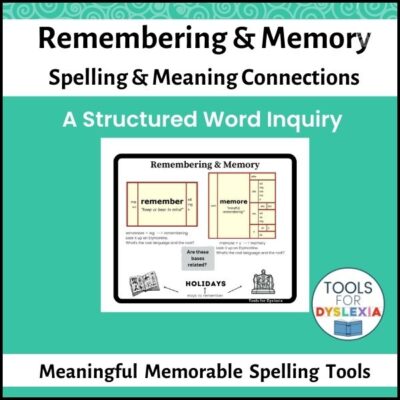
A word study to make note of the relationship between REMEMBER and MEMORY.
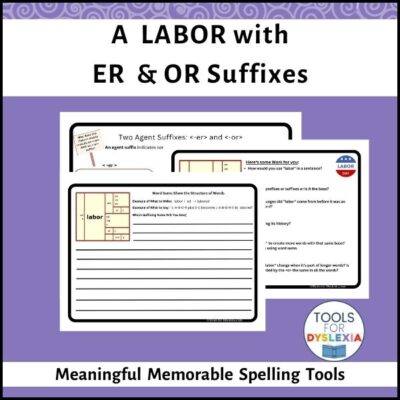
Why isn’t “labor” spelled with an <er>? Speaking of <er>, why are there some words spelled with an <-er> suffix and some with an <-or> suffix?
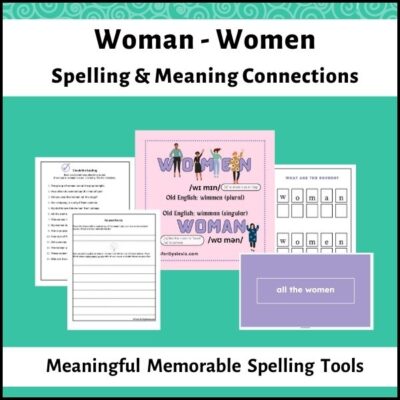
A student’s frequent trouble reading “woman” for “women” and misspelling both words led to this resource. His question about the spelling and how close his idea was to the Old English spelling were surprising to both of us.
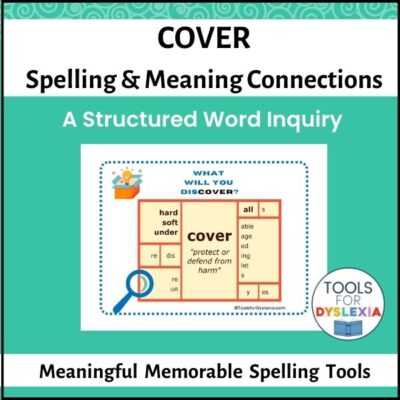
With this matrix resource, you’ll unCOVER spelling structure and phonology. When students (and adults) study words like this, you peel back the layers to see the spelling and meaning connections, essentially uncovering spelling treasure.
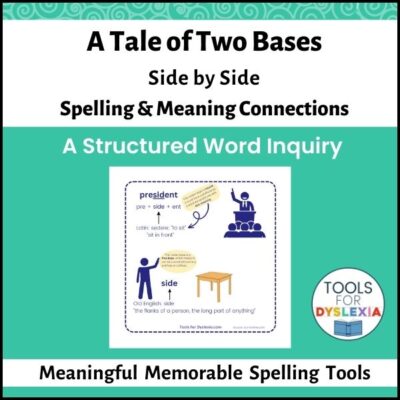
Side by side, let’s compare “preside” to “side”. If two words have the same base spelling, are they related?
Hmm…Good question. They might be. What about their meanings? Do they have the same sense and meaning? Here’s a critical determiner of word relationship–do they share the same root?
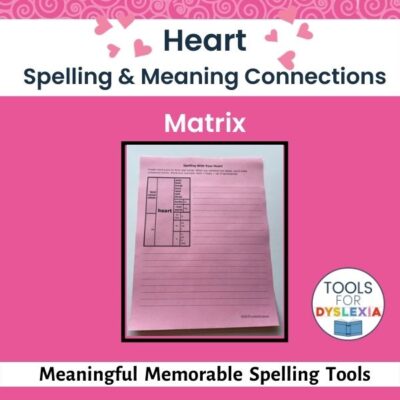
Get to the Heart of Spelling with a heart matrix. Whether it’s Valentine’s Day, a science lesson about the cardiovascular system, or learning the <ea> vowel digraph, this matrix will enrich your lesson.
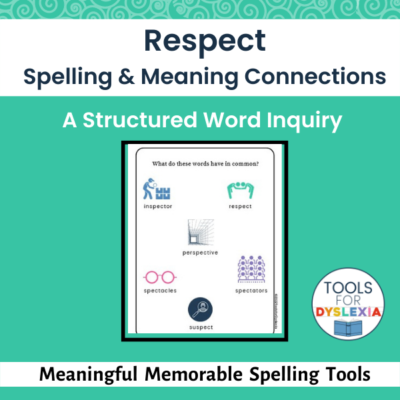
R-E-S-P-E-C-T. How could I resist that one?! This word study is a jump into structured word inquiry. Not sure how to do this? The information included will give you confidence to start using this way of connecting spelling and meaning.
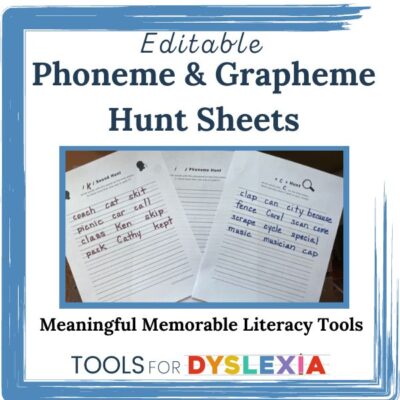
Free Download: Take your students on fun phoneme and grapheme hunts with these blank hunt sheets. Use them for introducing new letters or sounds. Engage them in the search. Then they’ll notice and think about spelling! Another fun way to practice and learn from Tools for Dyslexia!
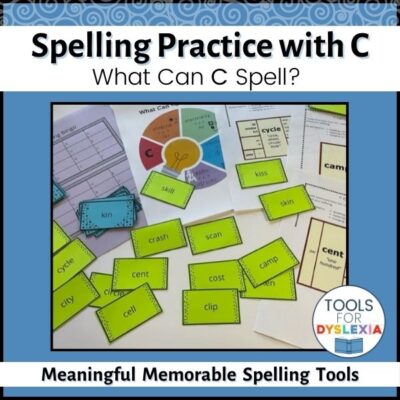
Students need spelling practice with C. Choosing between C and K when spelling /k/ takes repetition, noticing that C can spell /s/ as well as /k/ takes time, and the practicing to remember these has to be interesting and fun!
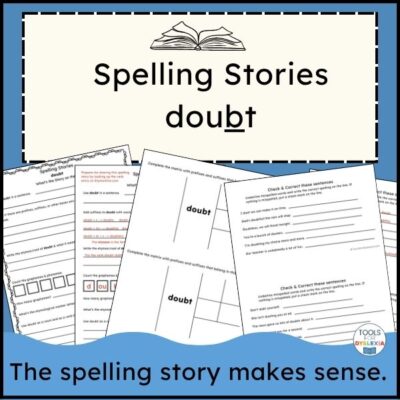
When I was a young student, one of my questions was: Why is there a <b> in doubt? Dyslexic students want to know the reasons for the spelling because that helps them make sense of it and remember it. We remember stories. Experience word study and an introduction to using etymology with Doubt: A Structured…
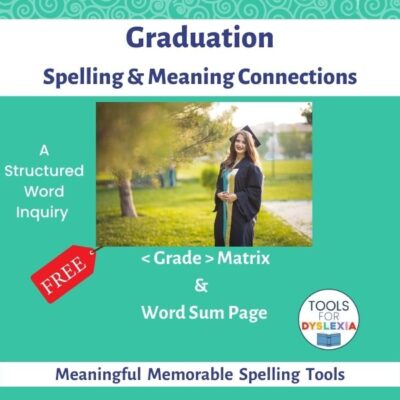
Would you like a simple word study to get your students familiar with morphology? Let’s look at the word graduation and its word family. What’s the base? What suffixing rule do we use in this spelling?
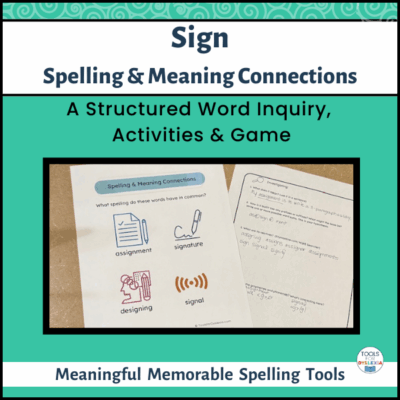
Why is there a G in <sign>? Often students misspell sign and other words with that base spelling because they’re trying to spell by sounding out. That doesn’t work well for this.. Give them the tools to see the spelling and meaning connections. After working through the matrix and other activities in this resource, these words will become more familiar, increasing their reading fluency and spelling accuracy.
End of content
End of content